
General Business Strategy
This is the second in a four-part series diving deeper into the growth capability gaps we introduced in our article The Business Growth Capability Gap That Engineering Firms Face. Each article explores one of the four critical systems. (The first is here).
We start here with something that often gets ignored until it’s too late: competitive positioning.
Effective positioning is CRITICAL to business growth. It must clearly articulate why the prospects you care most about should choose you rather than your competition. Without it you’ll always be an also-ran.
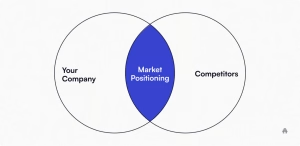
Nevertheless we constantly see engineering firms unable to explain what makes them different. They like to think delivering quality engineering is enough. And it is for moderate early-stage growth to maybe $5m. You might get to that level generating work from within your known network of contacts, existing clients and the odd lucky break.
But beyond that you need to earn scale by putting a strong positioning stake in the ground, getting known for something special, building reputation around your differentiating strength.
Because when a prospect asks peers about you, checks out your website, sees your name mentioned alongside competitors, or responds to an outreach message, they always ask the same question:
Why should I choose you?
A deceptively simple question that many engineering firm owners stumble over.
Good engineering solutions, good service, responsive, collaborative, trustworthy – these are the answers that almost always get trotted out. But here’s the uncomfortable truth about such generic statements: everybody claims exactly the same things – they’re simply table stakes. They don’t lose you deals per se. They just mean you’ll probably never even hear about those deals.
And if you do get a chance to compete? Well, when prospects can’t see a clear reason to choose you, they evaluate on the only thing they can see: price. And price-based competition is brutal. Margins disappear. Conversations become difficult. You find yourself saying yes to work you don’t want just to keep the pipeline flowing.
You’ve made yourself a commodity.
Another trap of generic positioning: nobody knows where to hang their hat! Ask a sales person or project manager what differentiates the business and you’ll get a different answer — sometimes quite different. Ask three people and you’ll get three versions. They’ll tend to lean on language that’s either too technical, too vague, or it sounds like empty sales claims. No way will this make an impact on your market.
This isn’t a criticism — it’s a pattern. Smaller engineering firms might be brilliant at the technical work. But distilling what they actually do differently than competitors and focusing the business around that … well that kind of work rarely happens.
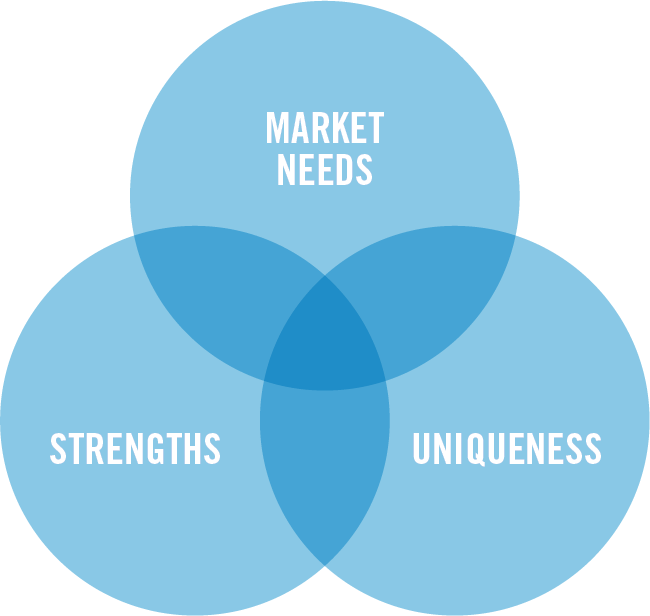
Strong positioning doesn’t happen by mistake and it certainly isn’t just about having a clever tagline. It’s about three interconnected things working together:
Could be the specific way you approach problems, the particular expertise you’ve built, the demonstrable capacity or speed advantage you have, the type of client you understand better than anyone else. Something that’s genuinely different from what competitors offer. Something your perfect prospect really cares about.
Distil what makes you different into concise and compelling language that captures it in a way that matters to prospects. Not marketing fluff — clear communication of the real advantage with proven demonstrations of how you deploy it in practice and how it benefitted your clients.
The right language and imagery has to show up everywhere: every sales conversation, your website, your case studies, your proposals. Whether prospects encounter you through LinkedIn, trade shows, email or whatever, they see the same differentiating quality reinforced. That consistency builds credibility.
Most engineering firms miss at least one of these pieces. Many can’t objectively see what differentiates them. Some have identified something genuinely different but can’t articulate it. Others create messaging that doesn’t reflect anything real. Still others have a good story but tell it inconsistently, so prospects get mixed signals.
Engineering firms that scale past through $10 and $15M plateau have one thing in common – they’ve built a powerful market position system — identifying what genuinely differentiates them, articulating it distinctively, and delivering it consistently at every prospect and client touchpoint — so they get known for what they’re best at and prospects understand the real reason to work with them.
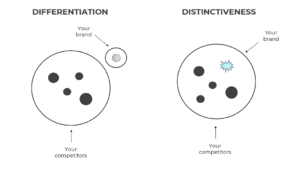
Firms that consistently scale past growth plateaus have made a deliberate shift. They’ve built a complete positioning system with three connected parts working together.
Identification: They’ve invested time in understanding what genuinely differentiates them. Not guessing, not assuming — actually analysing their business to find the real advantage. It might be a proprietary methodology. A specific market expertise. The ability to move faster than competitors. A particular problem they solve better than anyone else. Whatever it is, it’s real and it matters to the right clients.
Articulation: They’ve found clear, engaging language to express what makes them different. Not marketing-speak, but genuinely compelling communication. Language that comes across as authentic because it is. That cuts through the noise because it’s specific. That resonates because it addresses something prospects actually care about.
Demonstration: They’ve embedded that differentiation throughout their sales and marketing. It shows up in how they describe projects on their website. It’s reflected in the case studies they highlight. It shapes the conversations their sales team has. It’s reinforced in their proposals. When a prospect encounters the firm through different channels, they see the same differentiating quality consistently. That consistency builds confidence that the difference is real.
None of this requires a marketing department. It does require objectivity, intentionality and effort and discipline.
And it changes how prospects evaluate you. Instead of thinking “this is like the other firms we’re talking to”, they think “this firm has something the others don’t.”
Suddenly you’re not competing on price. You’re competing on value.
Before you can fix a positioning problem, you need to understand which part of your positioning system is actually broken. Here are three tests:
For most engineering businesses stuck at a modest stage of growth, honest answers to these tests reveal gaps in at least one or two of these areas.
That’s not a failure — it’s a gap. And gaps can be closed. But only if you recognise the essential need for a positioning system and embrace the work that goes into building one.
In the next article in this series, we’ll look at the third critical growth system: Client Engagement and Revenue Maximization — because scaling also depends on systematically growing the value of the relationships you already have.
We’ve built an online self-diagnostic tool specifically for engineering firms wanting to close their growth capability gap.
It takes about 7 minutes and evaluates your business against the four growth capability systems. You’ll receive a score showing where you have strong growth capability and where critical system gaps exist. More importantly, you’ll understand to what degree this is actually constraining your growth.
Take the Growth Capability Gap Diagnostic
BENCHMARK YOUR GROWTH CAPABILITY
InsideOut Group works with engineering and technical businesses developing the growth capability required to scale beyond founder-dependent models without making big investments.
If you’d rather have a discussion about what building these systems would involve for your specific situation, book a 30-minute diagnostic call with Rick Merten.